
Why Would a Musician Like Me Want to Make Music With AI?
Published (Mountain Time)
Why Would a Musician Like Me Want to Make Music With AI?
There is a question I get, directly or indirectly, whenever people find out I make music with AI: Why?
Why would someone who has played guitar, bass and drums for decades want to make music this way? Why would someone who has played hundreds of live shows, run recording studios, engineered demos and albums for more than 25 years, and shared stages with nationally known acts choose to use AI to create music?
The answer is actually pretty simple because I know exactly what it takes to make music without it, and sometimes, I am tired of all the things that get in the way of making the music.
I’ve Been on Both Sides of the Glass
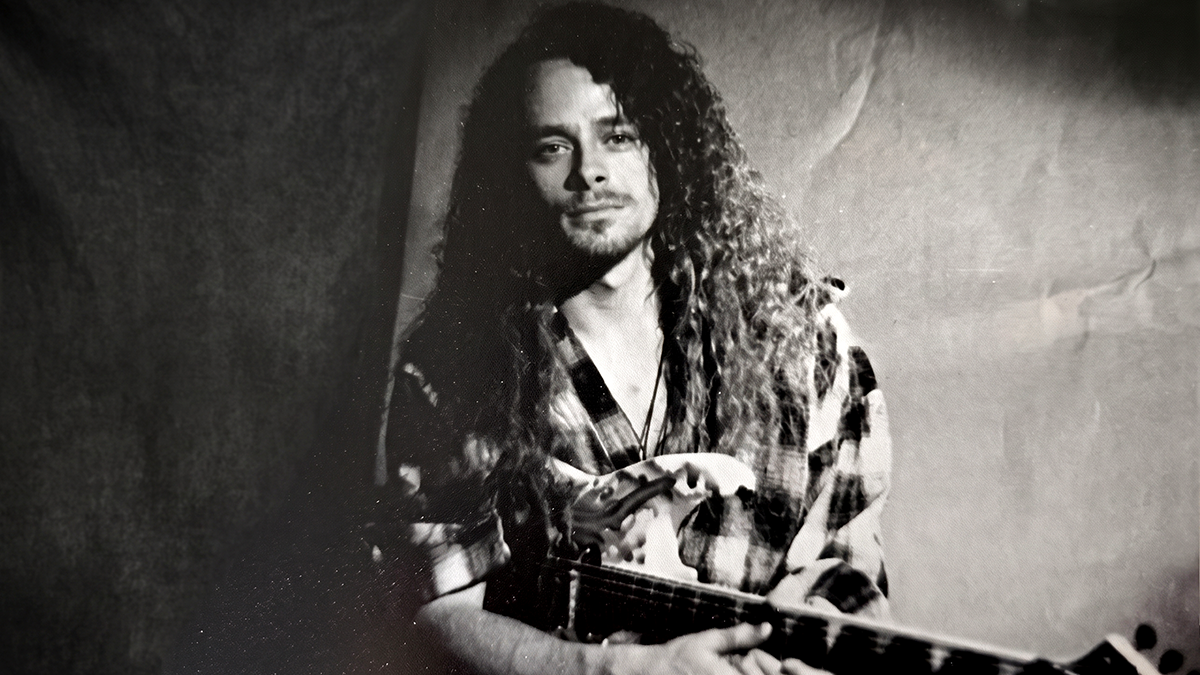
I’m a musician first. I’ve played guitar, drums and bass guitar for most of my adult life, with some experience on keys. I’ve played hundreds of shows, from bars and small clubs to larger venues, and I’ve shared bills with nationally known acts.
I’ve also spent more than 25 years on the other side of the glass, running recording studios and engineering demos and albums. So I know the difference between making music and merely talking about making music.
I’ve loaded and unloaded trucks. I’ve hauled amplifiers and massive drum racks. I’ve repaired instruments, replaced strings, drum heads, tubes, cables and hardware. I’ve chased down bad cables and noisy power supplies. I’ve waited for musicians to show up late, and I’ve waited for musicians who never showed up at all.
I’ve dealt with musicians who were great players but couldn’t get along with each other, musicians who could get along but couldn’t get their parts together, and musicians who simply weren’t ready for the job. I’ve also been one of the people responsible for making all of that work when it was time to record.
Then there was the live music scene.
The Reality of the Local Live Music Grind
There is a romantic idea of the working musician that doesn’t always survive contact with an actual nightclub.
Over the years, I played with and listened to an enormous number of live bands. Some were fantastic. A lot weren’t. I’m not talking about subjective differences in musical taste. I’m talking about bands that simply weren’t ready to be on a stage.
The problems were often everywhere. The sound could be terrible. The lighting might barely qualify as lighting. The person running sound might have little understanding of what the band actually needed. The club might have nobody on staff who really knew how to run a live music night.
Then there were the other bands. . . .
We generally showed up with our A game. We knew our material, knew our equipment and knew we had to deliver. Far too often, that wasn’t the standard being applied to everyone else.
It became a strange kind of ecosystem where everybody involved seemed to accept that the night was going to be mediocre and the audience would simply tolerate it. And the audience often did.
They were there to drink, socialize, dance, meet people and have a night out. The music was part of the environment. That isn’t necessarily an insult to the audience. It’s simply the reality of a lot of regional nightlife.
These weren’t Los Angeles club bands playing six nights a week in rooms where being exceptional was part of the job description. This was the Midwest club circuit, and the difference could be painfully obvious.
“Play Some Skynyrd!”
If you played original music in that environment, you learned pretty quickly what the audience often wanted.
I personally heard, “Play some Skynyrd!” more times than I care to remember.
There is nothing wrong with Lynyrd Skynyrd. There is something exhausting about spending years trying to write, rehearse, record and perform original music only to discover that the room would really prefer the songs it already knows.
The economic incentives were obvious. Cover bands could keep a dance floor moving for an entire night. Original bands were asking people to listen to songs they’d never heard before. Guess which one was far easier to sell?
The Ladder That Didn’t Really Go Anywhere
For a long time, the idea was that you played the clubs, built a following, wrote better songs, got better gigs, made better recordings, and eventually climbed your way into the next level of independent music.
That ladder was supposed to lead somewhere. But after enough years in the scene, I started questioning whether the ladder actually existed.
You could be a very good band and still be viewed as a bar band. You could write great original material and still be booked primarily because you could fill three hours with recognizable songs. You could put together a killer performance and still spend the night competing with a broken PA, bad lighting and a venue that didn’t really understand what it was presenting. Eventually, the grind itself became "the thing".
What did a musician in that scene actually gain? A tired back, a pile of equipment that needed maintenance, gas money, food, and little or no actual money left over. Meanwhile, the equipment still had to be maintained, strings and heads still had to be replaced, vehicles still needed gas and everybody still expected you to show up with another night’s worth of music.
And original music? That was often the thing everyone told you was important while simultaneously making it the least commercially useful thing you could bring into the room.
The Studio Was Different. Mostly.
The studio was where things got interesting for me.
I genuinely love producing music. There is something incredibly satisfying about taking an idea and turning it into a finished recording. Writing an arrangement, finding the right sound, getting the guitar tone right, fixing a performance, making a vocal sit correctly, building the drums, editing, mixing and listening to something go from a rough idea to a finished record. That’s the part I’ve always loved.
But even that process came with its own logistical nightmare when you’re working with a traditional band. You’ve got five people who need to be in the same place. Everyone has a schedule. Everyone has a job. Everyone has a life. Everyone has equipment, and all of that equipment needs to work. Then you start tracking.
A blown basss amplifier and a bass lacking maintenance that was not able to be used for tracking after a month of warning was the final straw for me that killed my last original band. At that point, I felt I had enough of musicians' irresponsibility to last me a lifetime.
One person lays down their part. Another musician comes in. Something needs to be redone. Someone’s amp isn’t behaving. Someone’s strings are dead. The drummer wants a different setup. The bass player is unavailable for three weeks. The guitar player has a gig. The vocalist gets sick. The studio schedule gets pushed.
Suddenly, a song that could have been creatively finished in a relatively short period becomes a months-long exercise in logistics. And that’s where AI music changed something for us.
The “I” Became a “We”
There is one important thing I should clarify at this point: When I talk about creating music with AI, I often use the word “I” because I’m describing my own experience as a musician. But the way we actually create music today is very much a we.
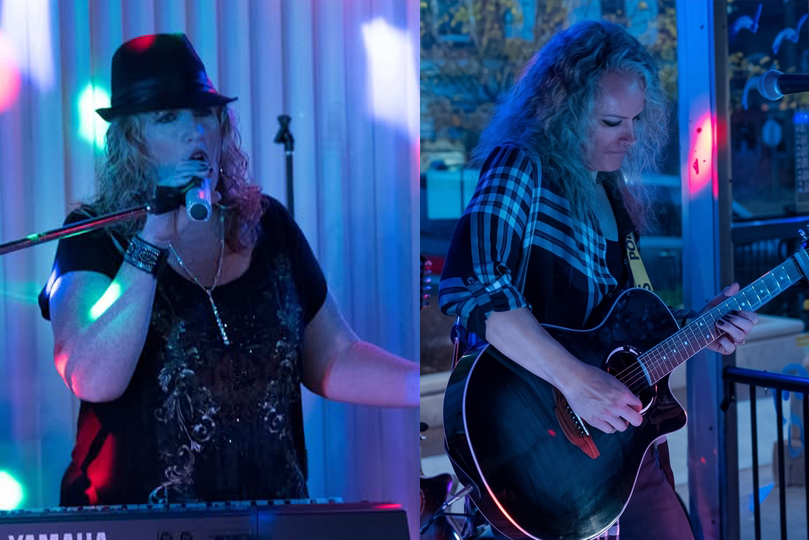
My wife and I write and create together. We are both completely invested in the process, and neither of us is sitting on the sidelines while the other person pushes a button.
We write together. We develop ideas together. We make creative decisions together. We work on the artists, the songs, the arrangements and the overall direction together. We listen, critique, revise and keep pushing until we get something we actually want to hear. That distinction matters because the technology isn’t doing the creative work for us. It is giving the two of us a production environment that allows us to move at the speed of our ideas. And we are both all-in.
AI Doesn’t Replace Our Musical Experience. It Changes the Workflow.
For us, AI isn’t replacing the reason I know music or the creative experience we’ve developed together. It’s changing how we can use that experience. still care about songwriting. We both care about arrangement, instrumentation and production. We care about whether a guitar part works, whether a drum groove fits, whether the bass is doing something useful, whether the vocal sells the lyric and whether the finished track actually hits.
I hear those things because I’ve spent decades listening for them. My wife brings her own creative instincts, writing perspective and musical sensibilities to the process. Together, we make the decisions about what stays, what goes and what needs more work. AI gives us another way to get from the ideas in our heads to something we can actually work with, and that’s incredibly liberating.
We can reject a performance. We can regenerate something. We can edit. We can fix things. We can use traditional music production tools to shape the result. We can spend our time making production decisions instead of spending that same time coordinating five people’s calendars. The difference is that we can spend more of our time creating music and less of our time managing the machinery required to get people into a room.
We Can Stay in a Constant State of Creation
One of the biggest advantages for us isn’t simply that AI can generate a performance. It’s that we don’t have to stop creating while we wait for everyone else.
That’s a massive difference.
If we’re working on a song and want to hear where it goes, we can move forward. If we want to experiment with an arrangement, we can do it. If we want to hear different instrumentation, we can try it. If we’re developing an artist, we can build that world. If we want to turn a collection of songs into an album, we can keep moving.
There is no rehearsal schedule to coordinate. No drummer who can’t make Tuesday. No guitar player who is out of town. No bassist who needs another month before they can track. No studio calendar. No waiting for somebody to get their amp working. No hauling an entire band into a room just to discover that the song doesn’t work the way everybody thought it did.
That doesn’t mean every AI generation is good. Far from it. We still reject performances. We still edit. We still fix things. We still make production decisions. We still spend considerable time working on the recordings after the initial generation. The difference is that we can keep the creative process moving.
AI Lets Us Build Artists, Not Just Songs
There is another part of this that I find particularly interesting. AI makes it possible for us to think beyond the individual recording. We can create an artist. Not just a voice, but an artist with a musical identity, a visual identity, a personality, a catalog and a story. We can develop a body of work that can continue across multiple releases. That opens up an entirely different creative playground.
Instead of asking, “Can I get five musicians together next Thursday?” we’re asking, “What does this artist sound like?” “What should this album feel like?” “Where does this character go next?” “What happens if we push this sound further?”
Those are creative questions. And creative questions are where we want to spend our time.
I’m Not Interested in Pretending I Didn’t Play the Instruments
I also have no interest in pretending that my decades of experience suddenly became irrelevant because the tools changed. I know what a drummer is supposed to do. I know what a bassist is supposed to do. I know what a guitarist is supposed to do. I know what a recording engineer is listening for. I know what a producer is trying to accomplish. I know what a live band sounds like when it’s locked in. I also know what one sounds like when it isn’t.
That experience doesn’t disappear because a computer is involved. If anything, it gives me a different perspective on what these tools can actually do.
I’m not approaching AI music as someone who has never held an instrument and suddenly discovered that software can make sounds. I’m approaching it as a musician and producer who has spent decades dealing with the practical realities of making records.
And now I’m doing that alongside my wife, who is just as deeply invested in the creative process as I am. After all those years, we know exactly how much of the traditional process has nothing to do with creativity.
The Point Isn’t That AI Music Is Better Than Human Music
I don’t think that’s the interesting question. The interesting question is: What can musicians do with these tools that they couldn’t do as easily before?
For us, the answer is a lot. We can write more. We can experiment more. We can develop more ideas. We can produce more music. We can create entire projects without having to assemble a room full of people every time we want to hear an idea. And perhaps most importantly, we can keep moving. That last part matters.
After decades of playing in bands, recording music and watching projects get slowed down by the realities of working with bands, there is something incredibly satisfying about being able to wake up with an idea and actually do something with it. No waiting. No rehearsal. No booking (or building) a studio. No asking five people when they’re available. No wondering whether everybody is going to show up prepared and with working gear.
Just the next song, then the next one, then the next.
Maybe That’s the Real Appeal
I didn’t turn to AI music because I stopped loving musicians. I turned to it because I love making music. And now, we make it together.
I’ve spent too many years watching talented people burn out on the logistical grind of trying to create something. I’ve spent too many nights watching good ideas get buried under mediocre sound systems, bad lighting, unreliable schedules and the economics of the local club scene.
I’ve spent too many hours waiting for the next person to be available so a project could move forward. AI doesn’t eliminate the work. It changes where the work happens. For us, that’s the appeal. We get to spend less time organizing the conditions under which music might eventually happen and more time actually making the music.
After all these years, that’s a pretty damn good reason to want a new tool.
I didn’t need AI to teach me how to make music. We needed it to help us make more of it.
Written by Marv Mays, Musician and CTO, Wylde Chylde Records, Partner at Digital Paper Dolls.